
Henna Cone Shelf Life for Gulf Countries: Storage & Climate Guide
Shelf life is one of the most important concerns for henna cone importers in Gulf countries. High temperatures, long transit times, and improper storage can directly impact henna cone quality, paste consistency, and customer satisfaction.
This guide explains henna cone shelf life in Gulf climates, how storage conditions affect both henna cones and henna tubes, and what importers should check before placing bulk or private-label orders.
Understanding Henna Cone Shelf Life
Henna cones contain ready-to-use henna paste, which is sensitive to heat, air exposure, and storage temperature. Unlike dry henna powder, paste products have a limited shelf life.
- Average shelf life depends on formulation and packing
- Temperature control plays a major role
- Export handling impacts final product stability
For Gulf importers, shelf life is not just a technical detail — it directly affects retail returns, brand reputation, and repeat orders.
Why Gulf Climate Requires Special Attention
Countries such as Saudi Arabia, UAE, Qatar, Oman, Kuwait, and Bahrain experience prolonged periods of high ambient temperatures.
- Summer temperatures often exceed 40°C
- Warehouses may not always be temperature controlled
- Last-mile storage at shops or salons adds risk
Because of this, henna cone suppliers for Gulf countries must design their products and packing with hot-climate stability in mind.
Henna Cone vs Henna Tube: Shelf Life Comparison
Importers often ask whether henna cones or henna tubes perform better in hot regions.
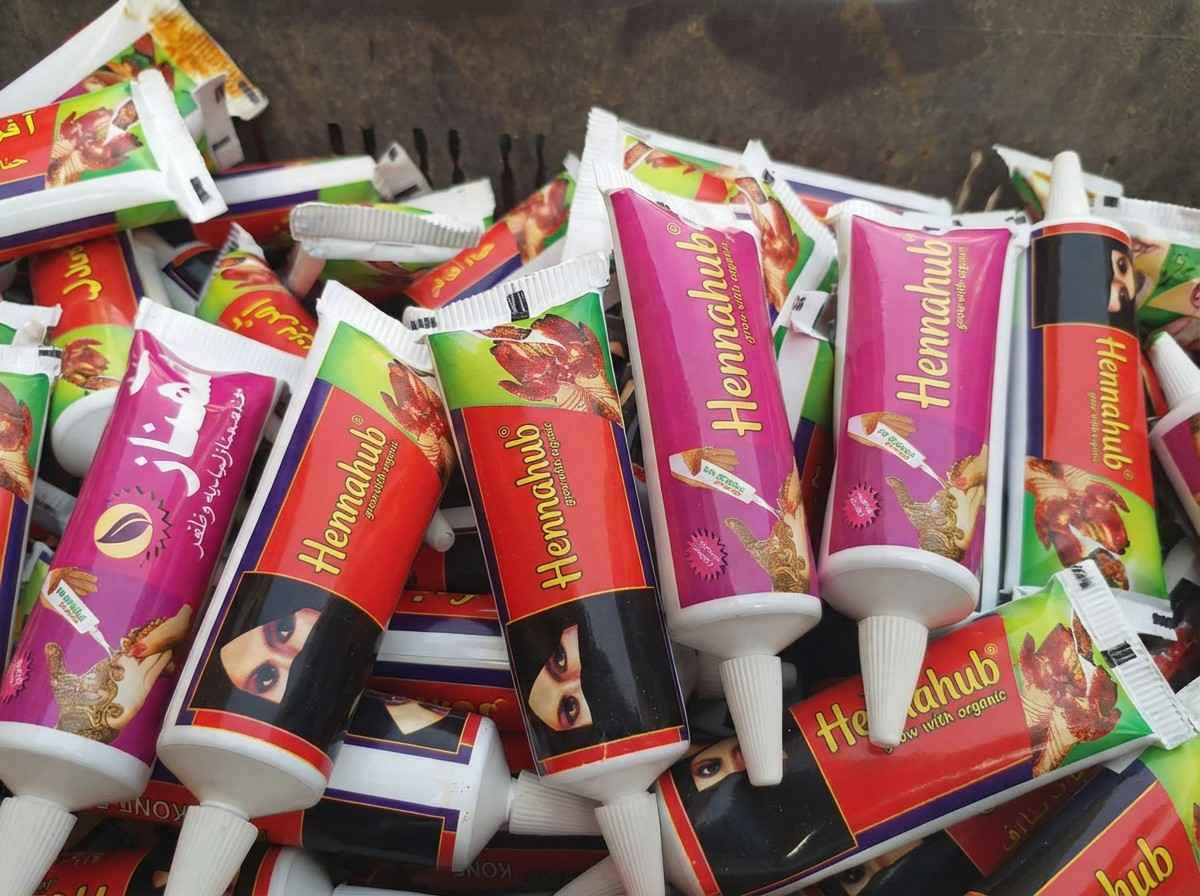
- Henna cones: Faster usage, preferred by artists, but more sensitive to heat
- Henna tubes: Better sealing, often slightly longer shelf stability
Many Gulf distributors stock both formats to serve different customer segments.
Recommended Storage Conditions for Gulf Markets
Proper storage significantly extends usable shelf life. Importers should follow these best practices:
- Store below 25°C whenever possible
- Avoid direct sunlight and heat sources
- Keep cartons away from humidity
- Rotate stock using FIFO (First In, First Out)
Clear storage instructions on retail boxes and master cartons help distributors manage inventory effectively.
Export Packing & Shelf Life Protection
Shelf life is not only about formulation — export packing matters.
- Leak-proof cones and tubes reduce paste degradation
- Inner poly wrapping protects against moisture
- Strong master cartons prevent heat exposure during transit
A common export configuration used by Gulf buyers is: 12 tubes per retail box and 60 boxes per master carton, ensuring efficient handling and storage.
What Importers Should Check Before Ordering
Before finalizing a henna cone exporter for Gulf countries, importers should confirm:
- Declared shelf life on packaging
- Manufacturing and expiry date clarity
- Stability under warm storage conditions
- Export documentation support
Reliable suppliers are transparent about shelf life limitations and offer guidance rather than unrealistic claims.
Why Shelf Life Transparency Builds Trust
In the Gulf market, long-term relationships matter more than short-term pricing. Importers prefer suppliers who provide:
- Clear shelf life communication
- Realistic storage recommendations
- Pre-dispatch quality checks
This approach reduces disputes, returns, and compliance issues at destination ports.
Always align shelf life, packing, and dispatch schedule with the destination country’s climate. This single step improves importer confidence and repeat orders.
FAQ: Henna Cone Shelf Life & Import for Gulf Countries
What is the typical shelf life of henna cones for Gulf countries?
Shelf life varies by formulation and storage conditions. Importers should always rely on supplier guidance and proper storage rather than assuming extended shelf life in hot climates.
Do henna tubes last longer than henna cones?
Henna tubes generally offer slightly better sealing, which can help in warm climates, but both formats require proper storage to maintain quality.
Is cold storage mandatory for henna cones?
Cold storage is not always mandatory, but cooler environments significantly help preserve paste quality, especially during peak summer months in Gulf regions.
What export documents should mention shelf life?
Commercial invoices, packing lists, and retail packaging should clearly show manufacturing and expiry dates for smooth customs clearance.
Can shelf life issues cause import rejection?
Yes. Improper labeling, unclear expiry dates, or damaged packing can lead to shipment delays or rejection at destination ports.
Why Gulf Importers Trust Export-Focused Suppliers
Experienced suppliers understand that henna cone shelf life for Gulf countries is a technical and logistical challenge — not just a marketing point.
Export-focused manufacturers like Hennahub India support Gulf buyers with:
- Export-ready henna cones and henna tubes
- Climate-aware packing strategies
- Clear shelf life and storage guidance
- Professional export documentation
Choose partners who understand climate, compliance, and long-term market success.